

What Is Thermoplastic Granule? A Guide to Choosing the Best Granule for Manufacturing Plastic Parts
In the plastics industry, the term “granule” is widely used. Many plastic parts manufacturers purchase their raw materials in the form of granules. But what exactly is a thermoplastic granule, and how does it differ from other forms of polymers? More importantly, how can you choose the right granule for your production line? In this article, we answer these questions.
What Is a Thermoplastic Granule?
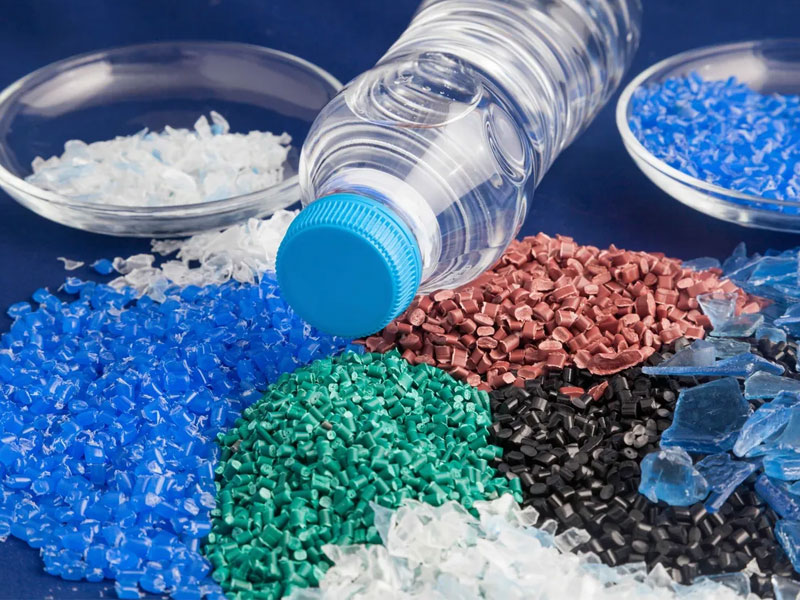
Simply put, a granule is the physical form of a polymer, not a type of material. During the initial manufacturing process, plastics are produced in powder or liquid form, which makes them difficult to handle and process. To facilitate transportation and use in injection molding and extrusion machines, the polymer is melted and formed into small lentil-shaped or cylindrical pellets, commonly known as granules.
Thermoplastics are a class of polymers that melt when heated and solidify upon cooling. This process can be repeated multiple times without significantly altering the material’s properties, making thermoplastic granules recyclable. As a result, they are the most widely used materials in the plastic injection molding industry.


Why Is the Use of Granules Essential?
1- Easy Weighing and Blending: Thanks to their uniform size and shape, granules can be accurately measured and easily blended with additives, color pigments (masterbatches), and other materials.
2- Reduced Contamination: Unlike powders, granules do not become airborne during handling, helping maintain a cleaner production environment and improving air quality for factory workers.
3- Uniform Melting: In injection molding machines, granules melt more uniformly, resulting in higher-quality parts with fewer defects such as bubbles, voids, or surface imperfections.
5-Step Guide to Choosing the Best Thermoplastic Granules
To ensure your final product is free from defects and delivers optimal performance, pay close attention to these five key factors when selecting thermoplastic granules:
1. Determine the Base Resin Type
First, identify the performance requirements of your application. Does your part require flexibility (such as PP or PE) or high strength and heat resistance (such as ABS, PA, or PC)? Choosing the wrong base resin can compromise the entire manufacturing process and negate all subsequent optimization efforts.
2. Consider the Melt Flow Index (MFI)
ََThe Melt Flow Index (MFI) indicates how easily a polymer flows in its molten state. If the MFI is not compatible with your mold or processing conditions, it can lead to issues such as:
A- MFI Too High: The material may flow excessively, leading to flash formation on the molded part.
ََB- MFI Too Low: The material may not flow sufficiently to fill the mold completely, resulting in short shots or incomplete parts.
3. Evaluate the Required Mechanical and Environmental Properties
Will the part be used outdoors and exposed to direct sunlight? Will it be subjected to mechanical stress? Be sure to choose a granule formulated with the appropriate additives, such as UV stabilizers for protection against ultraviolet radiation or impact modifiers to enhance impact resistance.
4. Evaluate Appearance and Material Purity
High-quality granules should be uniform in size, shape, and color. The presence of contaminants or color variations can directly affect the appearance and quality of the final product. Always purchase from a supplier that provides a Certificate of Analysis (COA) to verify the material’s quality and consistency.
5. Conduct a Sample Trial
Never purchase large quantities before conducting an initial trial. Obtain a sample bag of the granules and test it on your production line to evaluate its performance and processing behavior in your injection molding equipment.
Conclusion: Choose Wisely, Produce Profitably
Choosing the right thermoplastic granules is the foundation of successful manufacturing. Using high-quality granules not only reduces scrap and production waste but also extends the service life of your molds, resulting in greater efficiency, improved product quality, and lower overall production costs.
Are You Unsure Which Type of Granule Is Best for Your New Product?
The technical team at Morvarid Yazd Manufacturing Group has years of experience in the production and supply of thermoplastic granules and polymer compounds. We are ready to provide you with free expert consultation to help you select the most suitable material for your application. Contact our specialists today to receive professional guidance and request a product sample.