


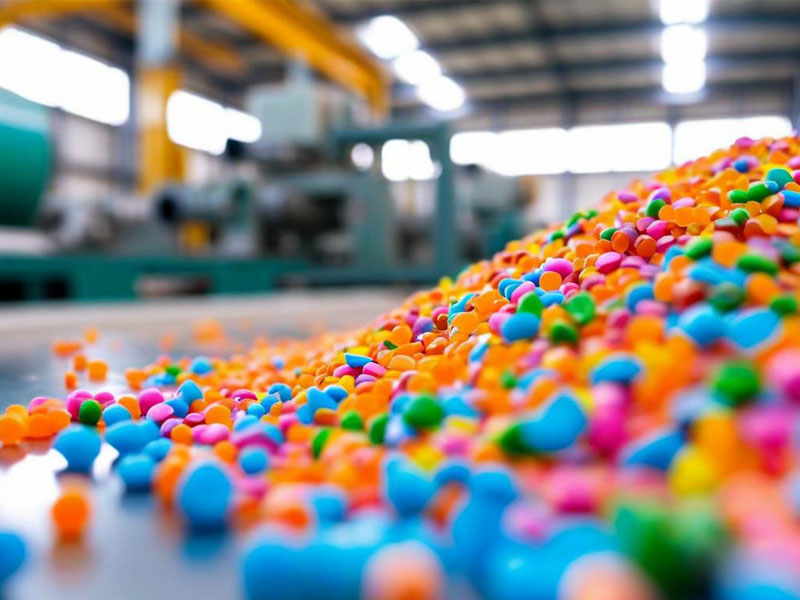
Engineering Polymer Compounds: Types and Their Applications in Critical Industries
In today’s advanced manufacturing landscape, conventional commodity polymers such as standard polyethylene are no longer sufficient for producing high-precision, high-performance components. As technology continues to evolve, the demand for materials that combine lightweight properties, exceptional mechanical strength, and superior thermal resistance has become increasingly critical. This is where engineering polymer compounds play a vital role, offering tailored performance for demanding industrial applications.
In this article, we explore the different types of engineering polymer compounds and examine their critical role in high-performance and strategically important industries.
What Is an Engineering Polymer Compound and What Makes It Different?
Unlike base polymers, an engineering polymer compound is the result of a sophisticated compounding and modification process. In this process, the base resin is combined with specialized additives such as glass fibers, mineral fillers, impact modifiers, and color masterbatches to achieve advanced properties that are impossible to obtain from the raw polymer alone.
Classification of Engineering Polymer Compounds Based on Performance
1. Fiber-Reinforced Compounds
This category includes compounds reinforced with glass fibers or carbon fibers.
1- Key Features: Significant improvement in elastic modulus, tensile strength, and dimensional stability.
2- Applications: Structural components that must withstand mechanical loads.
2. Flame Retardant Compounds
In critical industries, safety is the top priority. These compounds contain flame-retardant additives to improve fire resistance and safety performance.
1- Key Features: Self-extinguishing properties and prevention of flame propagation when exposed to sparks or ignition sources.
2- Applications: Electrical appliances, automation equipment, and electronic components.
3. Impact Modified Compounds
Many engineering polymers (such as PA and PC) become brittle at low temperatures. This issue can be addressed by incorporating impact modifiers, which enhance toughness and impact resistance.
1- Key Features: Absorption of impact energy without cracking or breaking of the part.
2- Applications: Automotive components that require high resistance against stone impacts, collisions, and potential mechanical shocks.


Applications in Strategic Industries
A) Automotive Industry
Nowadays, the primary goal of automotive manufacturers is lightweighting to reduce fuel consumption and increase the driving range of electric vehicles.
- Role of Compounds: Replacing heavy metal components with glass fiber-reinforced compounds (such as PA66 + GF). This approach reduces weight, improves resistance to chemicals (such as oils and fuels), and enhances the overall surface quality of the final product.
B) White Goods & Electronics Industries
In this industry, aesthetics and safety are both equally important.
- Role of Compounds: Using ABS or PC compounds to create glossy, scratch-resistant surfaces, along with flame-retardant (FR) additives to ensure the safety of high-power electrical devices.

C) Medical and Laboratory Industries
In this field, sensitivity reaches the highest possible level.
- Role of Compounds: Producing high-purity compounds that can withstand sterilization processes (Autoclave) and do not react with biological materials.
Challenges in Selecting Compounds for Critical Industries
A wrong material selection in these industries can lead to significant financial losses, product recalls, or even safety incidents. The three main challenges that manufacturers face are:
- Batch-to-Batch Consistency: Does the compound you order today have exactly the same properties and characteristics as the one supplied last month?
- Additive Compatibility: Do the selected additives have full compatibility with the base polymer, or do they create weak points within the material structure?
- Processability: Do the enhanced properties lead to a decline in injection molding quality or an increase in the production cycle time?
Conclusion: A Smart Solution for Advanced Manufacturing
Engineering compounds are the driving force behind innovation in modern industries. To achieve a product that meets global standards, you need more than just a raw material supplier; you need an experienced engineering team.
Are you looking for a customized formulation for your product?
At Morvarid Yazd Production Group, by utilizing advanced compounding technologies, we are ready to analyze your technical requirements and design and produce the most precise and optimized engineering polymer compound for your application.